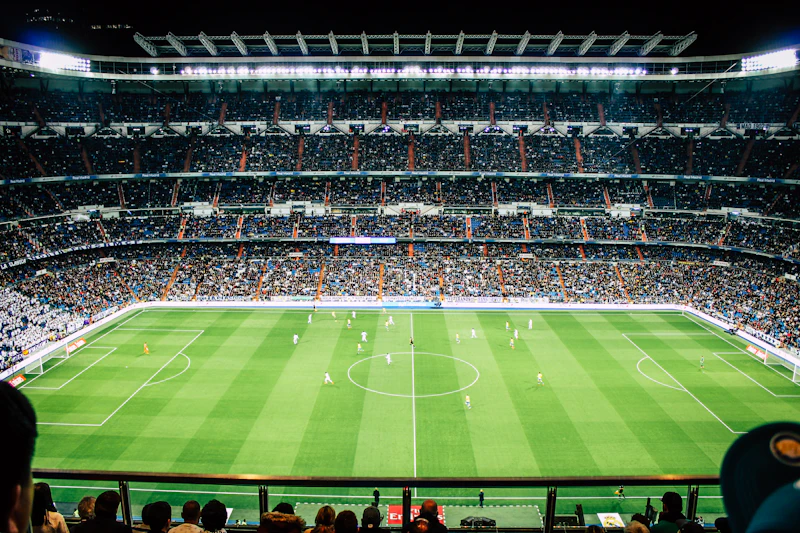
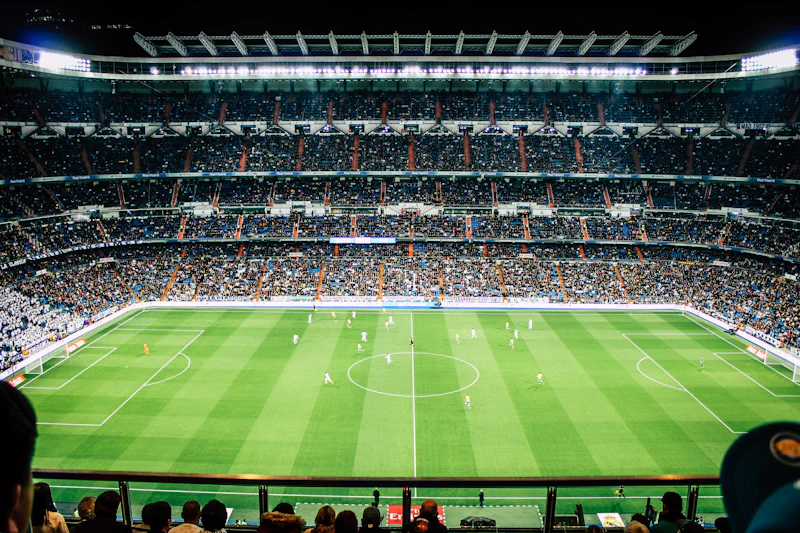
How professional scouts judge current form, combining live observation, contextual data, fitness, and character to decide whether a player's level is real and transferable.

Archive: 2026
451 stories published in 2026
Why club and international tactics diverge: preparation time, two-legged ties versus knockout sprints, and unfamiliar styles shape very different approaches.
Why corners and free kicks decide tight matches, how attacking routines and defensive systems work, and what to measure beyond goals scored.
What youngest-scorer and milestone records really mean, why context matters, and why early records predict opportunity rather than guaranteeing greatness.
A clear explanation of gegenpressing: how counter-pressing works, its triggers and traps, its fitness demands, and when pressing high becomes a risk.
What makes a World Cup dark horse, which profiles tend to surprise in the expanded format, and how to spot the next breakthrough team early.
How injuries ripple through a team's shape and results, why crises matter more than single absences, and how analysts measure the true impact.
A beginner-friendly guide to xG and match stats: what expected goals measures, how to combine it with other numbers, and the mistakes to avoid.
Why January and midseason signings can revive or disrupt a team, how position and integration time matter, and how to judge a window fairly.
How to predict football match results accurately: a simple stats model combining xG, shots on target and possession with weights, worked through with real arithmetic, plus the Poisson intuition, team-news checks, and honest accuracy limits.
The 2026 World Cup draw sorted 48 teams into four pots of 12, with one team from each pot in every group. Here is how the seeding, the host placements and the confederation rules shaped the groups.
Six teams contested the intercontinental playoffs for the final two places at the 2026 World Cup. Here is how the mini-tournaments worked, who took part, and why the winners landed in Pot 4.
Decimal, fractional and American odds all describe the same thing: how much a winning bet returns and how likely the bookmaker thinks the outcome is. Learn to convert between them and to read the implied probability hiding inside every price.
Both teams to score, or BTTS, ignores the result and asks only whether each side finds the net. Here is how the market settles, what shapes the price, and the traps that catch beginners. Betting involves risk; never stake more than you can afford to lose.
Over/under 2.5 goals is the most popular totals market in football: over wins on three or more goals, under wins on two or fewer. Here is how the line works, what drives it, and how to judge whether a price is value. Betting involves risk; never stake more than you can afford to lose.
Expected goals, or xG, rates every shot by how likely it was to become a goal. Learn what the number means, what it does not mean, and how fans and bettors can use it without being misled by it.
The 2026 World Cup added a round of 32 to the knockout stage, taking the tournament to 104 matches. Here is how the bracket was built, how third-placed teams were ranked, and how the path to the final was decided.
Home teams win more often than away teams in almost every league, but the size of that edge has shrunk in recent years. Here is what drives home advantage, what has changed, and how much it should matter in your analysis.
Value betting means backing a selection only when your estimated probability is higher than the probability implied by the bookmaker's odds. Here is how the idea works, how to calculate it, and why it is harder than it sounds. Betting involves risk; never stake more than you can afford to lose.
Binance co-CEO Yi He says user funds are safe and losses will be covered from company funds plus SAFU. The 1 November proof-of-reserves snapshot will test that claim.
Rest defence is the defensive shape a team keeps while it attacks, and it decides how often counter-attacks succeed.
World Cup squads are limited to 26 players, and coaches must balance goalkeepers, versatility, fitness and form within that number.
An overload is when a team puts more players than the opponent in one area, and it is the simplest way to break a compact defence.
Asian handicap betting removes the draw by giving one team a virtual head start, and the line you pick decides whether you win, lose or get refunded.