Are Binance User Funds Safe? What Binance Says

- Primary Signal: Are Binance User Funds Safe? What Binance Says
- Overview: Binance co-CEO Yi He says user funds are safe and losses will be covered from company funds plus SAFU. The 1 November proof-of-reserves snapshot will test that claim....
- Verification: Analyzed and compiled by 2026 Football Online editorial monitoring desk.
On 30 October 2026, after Binance suffered a security breach the previous day, the most urgent question for users is whether their funds are safe. Binance's answer so far is yes. Co-CEO Yi He has said user funds are safe and that all losses will be covered from company funds plus the SAFU emergency fund. The investigation is ongoing, however, and the figures reported so far are preliminary estimates.
The breach on 29 October 2026 is estimated to have affected about $6.3 billion, making it the largest crypto theft on record on that estimate, ahead of Bybit's $1.5 billion in 2025. Binance is described as the world's largest crypto exchange. The size of the estimate is why Binance's assurance about user funds is being examined closely, rather than taken as a final proof on its own.
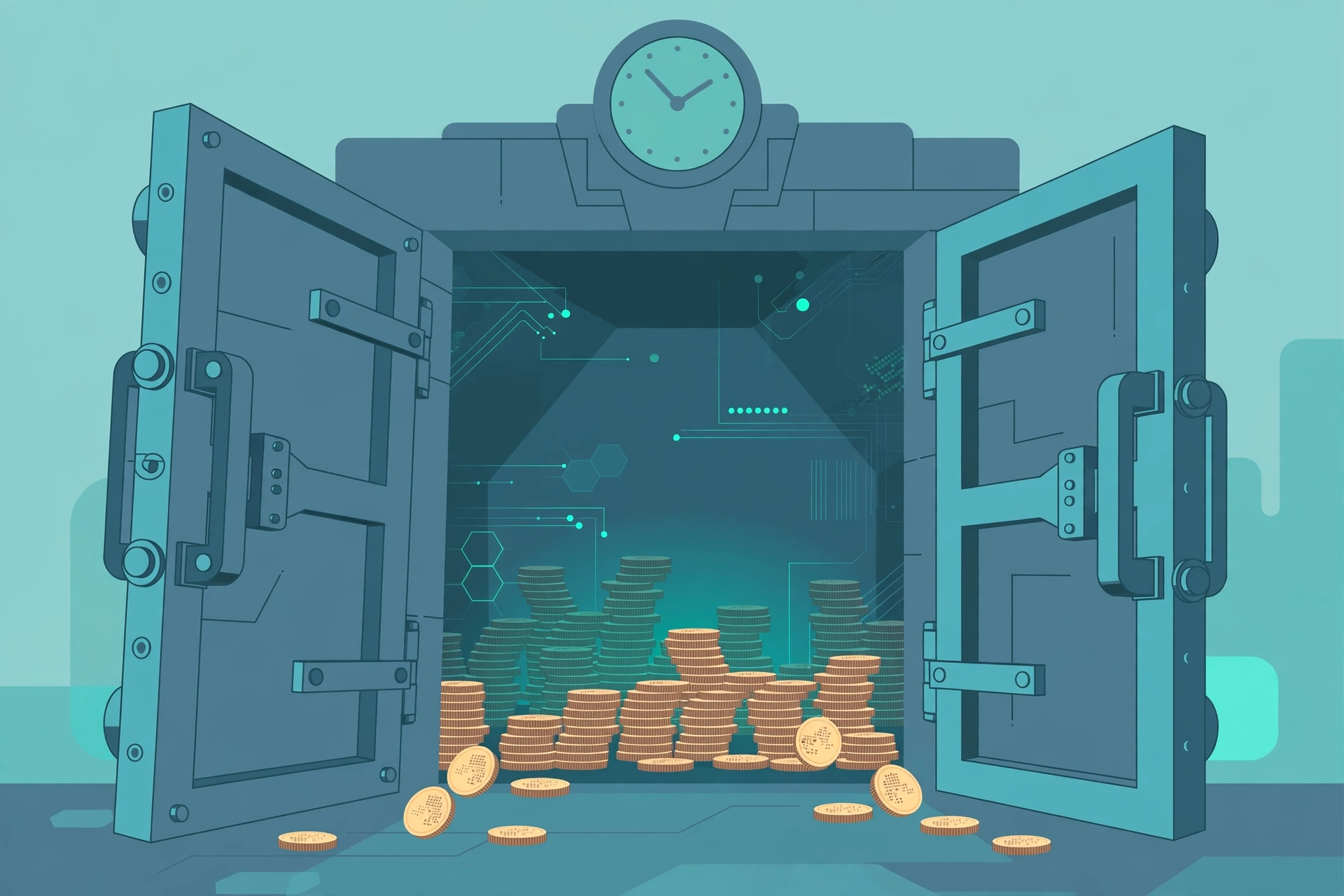
SAFU is central to that assurance. It is Binance's emergency fund for users and is reported to hold around $1 billion in bitcoin. Yi He's statement paired SAFU with company funds, which matters because the reported SAFU holding alone is smaller than the estimated $6.3 billion total. No detailed payout breakdown for this incident has been published so far.
Recovery efforts are also relevant to the safety question. Around $3 billion has been frozen so far, including $2.3 billion in USDT and USDC. Tether froze more than $1.567 billion in USDT, Circle froze about $823 million in USDC, Ripple froze around $200 million, and World Liberty Financial froze $27 million in USD1. Frozen assets are not yet returned funds, but they limit further movement by an attacker.
Operationally, deposits and withdrawals were suspended as a precaution. Yi He said she expects withdrawal resumption to begin within the next 48 hours. Some reports say deposits were unaffected, so there is a discrepancy in reporting. Users should check the current status through official Binance channels rather than assuming either version is certain.
The next proof-of-reserves snapshot, due on 1 November 2026, will be an important test of the safety claim. It will show whether stolen assets were replaced. The 1 October snapshot showed ETH backing at 100 percent, while after the reported movement of about 204,500 ETH from the wallet Binance 14, ETH backing was reported near 94 percent.
Preliminary findings about the cause may also reassure some readers, with caution. A compromised DevOps engineer's laptop may have let an attacker access a service container and submit unauthorised withdrawal transactions, according to the preliminary investigation. No evidence of a wallet private key leak has been found so far, on a preliminary basis. Those findings are not final, so they should not be treated as a complete safety verdict.
Market turbulence followed the breach, with Bitcoin falling below $77,000, down about 4.5 percent in 24 hours to $76,664 and later around $77,984, ether down about 3.2 percent, BNB down about 3.9 percent, and over $1 billion in leveraged positions liquidated in 24 hours. Those are market facts, not a statement about individual accounts, and this article gives no advice on buying, selling, holding, or withdrawing.
FAQ: Are Binance user funds safe? Binance co-CEO Yi He has said user funds are safe and losses will be covered from company funds plus SAFU. How will that be checked? The proof-of-reserves snapshot on 1 November 2026 will show whether stolen assets were replaced. Is anything still uncertain? Yes, the investigation is ongoing, figures are preliminary, and readers should rely on official Binance channels for updates.
📖 Continue Reading the Full Story
Continue reading this article on 2026 Football Online.
⚡ Access Full Content NowMore from 2026 Football Online



 🎰 WinBar VIP
Binance Withdrawals: What the 48-Hour Restart Looks Like
Binance co-CEO Yi He expects withdrawal resumption to begin within the next 48 hours. That is an expectation, ...
 ⚽ SportsBet Insights Live
Operational Standard: Typing Speed Test — WPM & Accuracy Test Online (Day 21 Guide)
Establishing consistent quality with the Typing Speed Test — WPM & Accuracy Test Online on SportsBet Insights ...
 🐋 CryptoAce VIP
Is Keeping Crypto on an Exchange Safe for the Long Term in 2026?
Exchanges are built for trading, not storage. The real question is not whether exchanges are safe, but which r...
 ⚽ Global Football Odds
Regulatory & Compliance Guide: Typing Speed Test — WPM & Accuracy Test Online (Day 25 Guide)
Navigating statutory requirements with the Typing Speed Test — WPM & Accuracy Test Online on Global Football O...